700% GDP Growth: Seychelles' Currency Reflects National Rise
"A single piece of paper can represent the weight of an entire nation's sovereignty."
Understanding the Seychelles Rupee requires looking past the colorful notes to the history of an archipelago that fought to define its own value. For travelers and economists alike, the currency is a symbol of a small nation navigating a vast ocean.
* The currency evolved from colonial administrative structures into a symbol of national identity. * Monetary autonomy was a crucial step in the transition from colonial rule to self-governance. * The current policy is designed to balance a tourism-heavy economy with global market fluctuations.
How did the Seychelles Rupee come to be? A heavy brass key sits on a mahogany desk in a colonial-era building in Victoria, representing an era when money was dictated by distant empires. In the early days of the archipelago, the economy was not defined by its own coinage but by the administrative needs of the powers that held the islands.
According to the Central Intelligence Agency, as of 2018, 95.9% of the population aged 15 and over can read and write in the Seychelles.
Before the modern Rupee took its current form, the islands operated under various colonial influences that shaped their economic structures. The transition from being a colonial outpost to a sovereign state required a complete overhaul of how value was measured and exchanged.
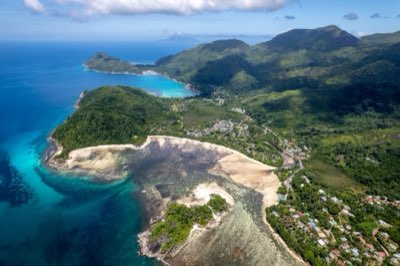
The geography of the islands played a massive role in this early economic identity. The archipelago is located in the Somali Sea segment of the Indian Ocean, northeast of Madagascar and about 1,600 km (860 nmi) east of Kenya.
This remote location meant that early economic life was isolated, making the eventual need for a localized, manageable currency even more vital for internal trade.
The scale of the islands meant that economic development had to be handled differently than on a large continent. The archipelago consists of many islands, but the primary economic hubs are centered around Mahé, Praslin, and La Digue.
Because the land mass is relatively small, the transition to a unified currency was essential to prevent fragmentation between the different islands.
The sheer scale of the archipelago's maritime territory versus its actual land mass meant that managing a localized economy required a very specific type of fiscal oversight [T5, T6].
As the islands moved toward independence, the need to move away from foreign-controlled currencies became a matter of national pride. The transition phases were not just about changing paper; they were about establishing a foundation for a modern state.
How did we achieve monetary autonomy? A group of local leaders gathers in a quiet meeting room, debating the fine print of a new constitution that will govern their future. This moment represents the shift from being a territory to becoming a player in the global economy.
Achieving monetary autonomy was one of the most significant milestones in the history of the Seychelles. For a small island nation, establishing deep financial sovereignty is a daunting task that involves creating institutions from the ground up.
The relationship between the adoption of the Rupee and national self-determination was inseparable. To truly be independent, the nation needed to control its own money supply and inflation rates.
The challenges were significant. A small nation lacks the massive industrial base of larger neighbors, making its currency sensitive to external shocks.
The shift from dependence on colonial fiscal structures to self-governance required building a central banking framework that could withstand the volatility of international markets.
This journey was about more than just printing money; it was about building the institutional capacity to manage a nation's destiny.
Characteristics of Seychelles' Independent Monetary Policy
A technician adjusts a digital readout on a computer screen in a quiet office, monitoring the fluctuations of the exchange rate in real-time. This is the modern face of monetary policy: precision and constant oversight.
The current monetary framework of the Seychelles is designed to maintain stability in a highly specialized economy. Because the nation relies so heavily on tourism, the currency is subject to unique pressures.
The role of the central authorities is to manage these fluctuations so that the cost of living remains stable for citizens while making the country an attractive destination for visitors.
The policy is essentially a balancing act. It must respond to the realities of a small, highly dependent economy where a single season of low tourist arrivals can impact the entire national budget.
The primary goal is to maintain enough liquidity to support the economy while preventing the runaway inflation that can plague small, open economies.
By aligning monetary goals with national economic goals, the authorities attempt to create a predictable environment for both local businesses and international investors.
Seychelles' Economic Context: A Microcosm of the Currency's Role
A merchant in the Victoria Market counts a stack of colorful notes, her eyes scanning the bustling crowd of the capital. In this moment, the abstract concept of "monetary policy" becomes a very real, daily practice of survival and growth.
The economy of the Seychelles is a fascinating case study in how a small nation can leverage its natural beauty into significant economic growth. The national economy is heavily reliant on international flows, particularly through the tourism sector.
This reliance means that the value of the Rupee is intrinsically tied to the global travel market.
Historically, the economic trajectory of the nation has been remarkable. From 1976 to 2015, nominal GDP grew nearly 700%, and purchasing power parity grew by nearly 1600%. This massive growth reflects the successful transition from a colonial economy to a modern, service-oriented one.
However, this growth also brings the challenge of maintaining stability. The currency acts as the medium through which this wealth is managed and distributed.
The ability of the economy to grow so significantly while maintaining a sovereign currency is a testament to the strength of its underlying economic structures.
Navigating Global Finance: Seychelles in the International Arena
A large cargo ship moves slowly through the turquoise waters of the Indian Ocean, carrying goods that will soon be exchanged for local currency. The connection between global trade and the local economy is visible in every shipment that arrives at the docks.
According to the World Bank, Seychelles recorded international tourist arrivals of 124,500 in 2020.
The Seychelles Rupee must interact constantly with global trade and tourism flows. Because the country imports many of its essential goods, the strength of the Rupee against major global currencies is a vital factor in the cost of living.
The role of international arrivals is a primary driver of the economy. In 2020, for example, the country recorded 124,500 international tourist arrivals. Such fluctuations in visitor numbers directly impact the demand for the local currency and the overall economic health of the islands.
Navigating the international arena requires the Seychelles to maintain a delicate balance. It must participate in global finance to support its economy while protecting its domestic interests. The currency is the tool that allows the nation to participate in the global economy on its own terms.
As the nation continues to grow, the ability to manage this interface will remain the cornerstone of its economic sovereignty.






Comments 0